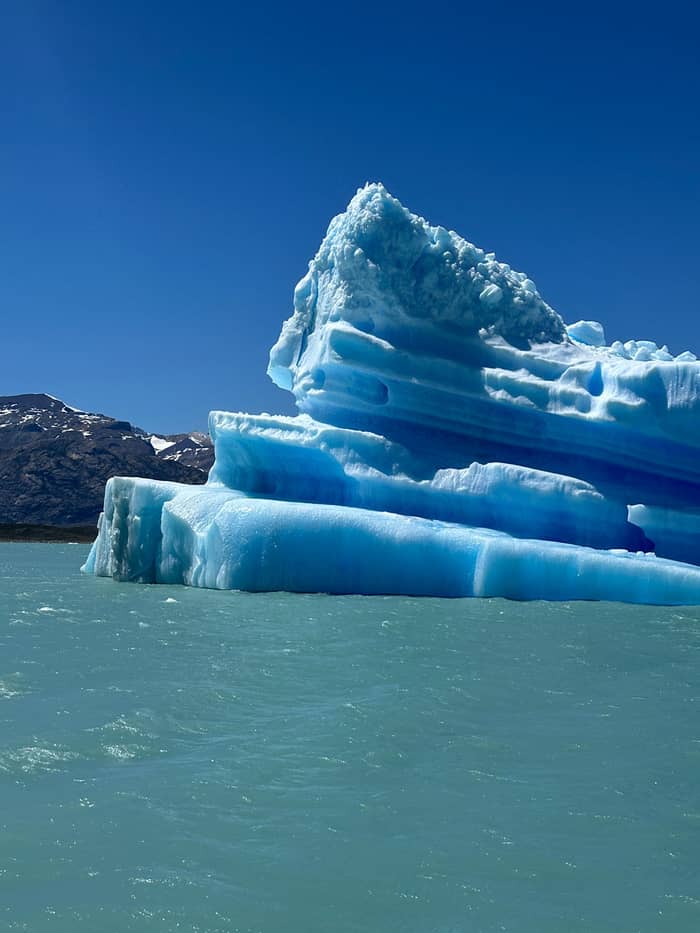
Windy
Summer
Long days, strong winds
Check cruise datesGuides
Language
Currency
Find a datestarts at $225 · cancel freeChecklist to tick off
Your list · 9 items
Tick items as you finish them. We save your progress on this device.
0 / 9 ready
Ready to go. Only your sailing date is left to pick for the day on Lago Argentino.
Reserve a spotIs El Calafate safe for a relaxed glacier holiday? Here is what government travel advice says, how the weather on Lago Argentino behaves, which layers to bring for the deck, and how close the boats go to the ice.
Editorial team, elcalafateglaciercruise.com · Updated November 9, 2026 · Read in 8 min
Is El Calafate safe? Government travel advice gives no reason for alarm. Canada's advice for Argentina, last updated on 14 October 2026, is to take normal security precautions across the country,1 and the higher level of caution it sets applies to the Greater Metropolitan Area of Buenos Aires, because of crime there.7 Nothing in that advice singles out El Calafate or the national park.
Normal precautions still mean something. Pickpockets work buses, trains and their terminals around Argentina, the UK government warns:8 keep your bag in front of you at the El Calafate terminal and on the airport shuttle. In bars and restaurants, never leave a drink unattended and do not accept food or drinks from strangers.9 That advice matters most on a celebration night after the cruise, when a crowded bar makes it easy to look away from your glass.
For taxis, the UK government advises booking in advance where you can rather than taking whatever passes.10 Ask your hotel to call one, especially at night or from the bus terminal. The same habits that keep you comfortable in any small tourist town work here: keep valuables out of sight, carry a copy of your passport, and know where your accommodation is before you set off in the dark.
By season
| Season | What the park says | What to pack |
|---|---|---|
| Summer | Strongest winds of the year11 | Windproof shell, sunscreen |
| Autumn | Yellow, ochre and red forests21 | Extra warm layer, gloves |
| Winter | Low temperatures, heavy snow22 | Thermal layers, insulated boots |
| Spring | Inside the recommended season2 | Layers for sudden changes |
Season notes from Parques Nacionales; conditions can change at any moment, whatever the month.23
If you rent a car, protect what is inside it. The UK government singles out unattended cars, rental cars most of all, as a frequent target for thieves,14 and the cruise operator offers no security service for cars parked at its port.15 Leave the car empty. Drive slowly in the park and watch for animals crossing the road. Pull fully off the asphalt before you take photos, and never stop on a bend.
Plan for a weak phone signal. Expect dead zones for your phone in parts of the park:16 share your plans with someone in town and keep the park information center's number, 02902-492504, written down.17 For families, the municipal tourism office asks that minors carry their identity document and travel with parents or accredited guardians, especially on lake excursions.18 Pack those documents with the tickets the night before, so nothing is left in the hotel safe.
Insurance is the last piece. For adventure activities, Canada advises travel insurance that includes helicopter rescue and medical evacuation,19 and the same cover is worth having on a remote lake far from the nearest town. A Perito Moreno Glacier boat tour in Argentina is not an extreme sport, but the lake is remote: check what your policy says about outdoor activities and boat trips before you travel. Store your policy number and the insurer's emergency contact both on your phone and in your wallet.
Temperatures
Average temperatures in degrees Celsius for the town of El Calafate, as its municipal tourism office gives them; the deck near the ice feels colder.20
The weather around the glaciers is cool all year. For the low-lying parts of the park, Parques Nacionales puts the winter mean at 0.6°C and the summer mean at 13.4°C,27 and rainfall of 500 to 900 mm a year, rising from east to west and spread fairly evenly through the months.28 In other words, the closer the boat gets to the Andes and the ice field, the wetter the air tends to be. Pack for rain even when the sky over town is clear in the morning.
Wind is the factor that shapes the deck. According to the town's tourism office, the prevailing winds come from the west and southwest and pick up in frequency and strength in summer,3 and the park's own climate note agrees that summer is the windier season, with deep snow kept for the cold months.11 On an open deck, a fresh breeze off the ice feels far colder than the thermometer suggests. Wind chill, not air temperature, is the number to dress for on the lake.
Above all, expect change. The park warns that weather conditions can switch from one moment to the next at any time of year.23 A cruise can start in sunshine and pass through rain, sleet or a sharp squall before lunch, then clear again by the north wall of the Perito Moreno. The town's own figures put the average annual temperature at 7.2ºC, with July around 1.8ºC and January at 18.6ºC.20
Pack for your day
Pick the line that describes your trip and add the item.
If I feel the cold easily
Thermal socks and gloves
Both are on the operator's packing list.26
If I will be on deck taking photos
A spare battery and binoculars
Both a backup battery and binoculars are on the operator's list.26
If I am getting off at the footbridges
Ankle-high trekking shoes
The walkways have a metal grille floor.12
If I am sailing in summer
Sunglasses and UV 40
The town's tourism office recommends both.6
If I am driving myself in winter
Snow chains
Chains or studded tires are compulsory on park roads in winter.25
Seasons on deck
Windy
Long days, strong winds
Check cruise dates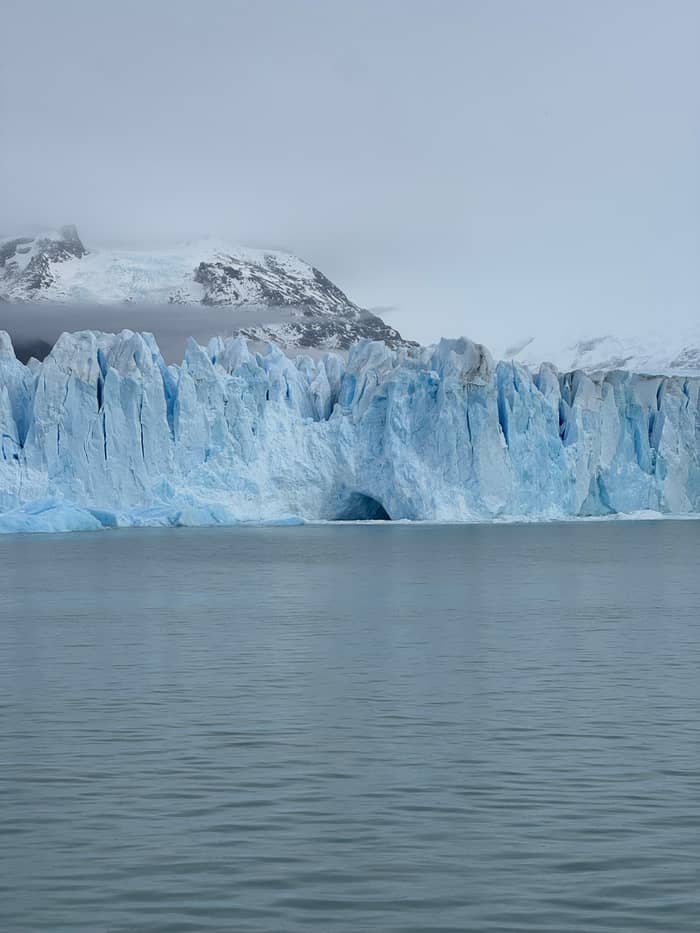
Colorful
Colored forests
Check cruise dates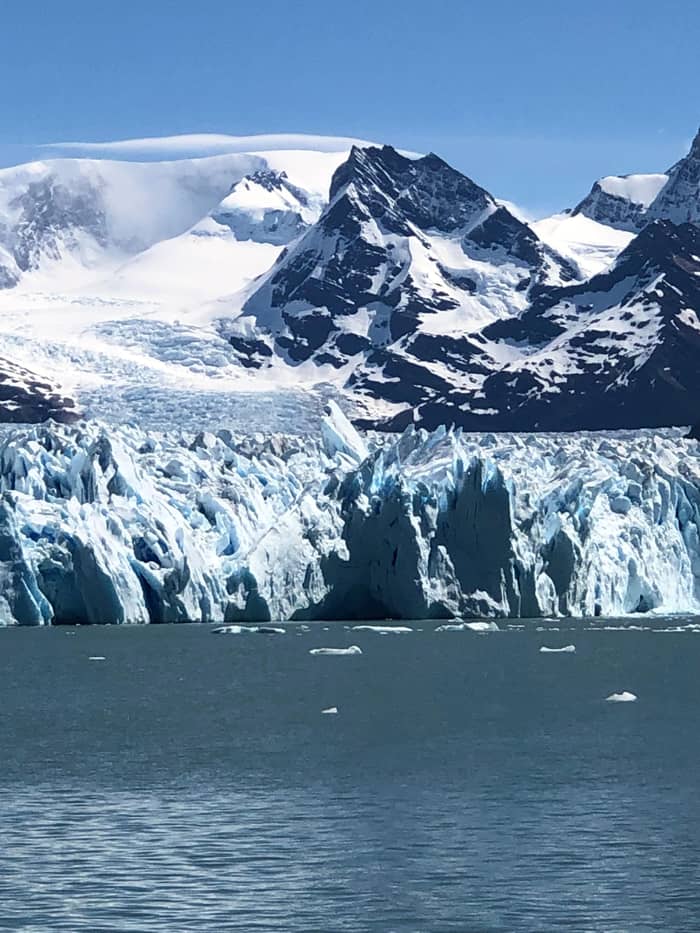
Snowy
Snow on the shores
Check cruise datesParques Nacionales recommends visiting between September and April.2 Summer brings the longest days, along with the strongest winds, while autumn paints the forests in yellow, green, ochre and red.21 Spring and autumn sit at the edges of the season, with shorter days and cooler evenings. They suit travelers who do not mind an extra layer on deck, and the views of the ice are just as complete.
Between May and October the cold sets in, and heavy snow, mostly in the winter months, puts some trails and activities out of easy reach.22 The operator keeps sailing through the year, sending a boat out daily between 1 September and 30 April and on alternate days from 1 May to 31 August.24 A winter sailing can bring snow on the shores, but check the timetable early, as the gaps between departures are longer. Ask your hotel whether winter pickups run on the dates you need.
Drivers face extra rules in the cold months. Winter drivers must fit chains or studded tires before using the park's roads.25 If that sounds daunting, book the hotel pickup and let someone else drive. Whatever the month, keep a day in reserve: weather that rules out the lake one morning can clear the next. Free cancellation until 24 hours ahead lets you shift the sailing into that spare day.
Layers through the day
Dress like an onion. The park's advice is to dress in layers, since its winds blow cold and nights stay cool even in summer,4 and it names a light waterproof windbreaker as a traveler's best friend in Patagonia.5 Build from a thermal base, add a fleece or thin down jacket, and top it all with a shell that blocks wind and rain. Zips at the neck and wrists let you vent heat inside and seal it in again outside.
The operator's own packing list is longer: warm clothing, jacket and trousers, a waterproof, hat, gloves, thermal socks, trekking boots or laced waterproof sneakers, sunglasses, sunscreen, a camera with a second battery, and binoculars.26 Its short version for the gourmet cruise is comfortable clothing, a coat and athletic shoes.30 Bring the long version for the deck and the short one for the saloon.
Do not forget the small things. The park suggests comfortable shoes, a hat and a water bottle,31 and the town's tourism office recommends a hooded windbreaker, gloves, a scarf and trekking or sneakers.29 A small day bag keeps spare layers within reach, so you can take them off in the warm saloon and put them back on in seconds when the next glacier appears. Cotton stays wet once it gets damp: choose wool or synthetic fabrics next to the skin.
Video
Cascada Expediciones on YouTube · The video waits until you tap play to load.
A good light waterproof windbreaker is the best friend of anyone who visits Patagonia.
Cold air does not mean weak sun. The municipal tourism office reminds visitors not to forget sunglasses and sun protection with a UV factor of 40,6 and on the lake the light comes at you from the sky and again off ice and water. A brimmed cap under the hood shades your eyes; spread sunscreen on face, ears and the backs of the hands before boarding. Lip balm with sun protection saves you from cracked lips by the evening.
Your hands need the most help. Gloves are on the operator's list for a reason you will feel at the bow:26 holding a camera or phone in the wind numbs bare fingers within minutes. Touchscreen-friendly gloves or thin liners under warmer mitts let you shoot without exposing your skin, and a spare battery kept in an inner pocket stays warm and lasts longer. A thin buff or scarf pulled over the nose helps on the windiest stretches.
Planning to leave the boat at the glacier footbridges? Then think about your shoes too. Parques Nacionales asks for trekking shoes that hold the ankle on the walkways, because the floor is made of metal grilles,12 and the walkway map warns that rain, ice or snow make the surface slippery, so take short, firm steps.13 Keep your hands free on the stairs for the rail, and your camera on a strap around your neck.
Anyone hoping for a Perito Moreno Glacier boat tour close to the ice wall should know where the limits lie. The gourmet day does reach the Perito Moreno, nosing down the iceberg channel to its north wall,32 while the listing is clear that the Upsala and Bertacchi are viewed only from afar. Expect to watch every face from a distance, with the whole wall in view rather than a slice of it.
Distance matters near calving ice. Parques Nacionales describes the fall of large blocks of ice as a spectacle in its own right,33 and the walkway map adds that flying shards from a collapse can travel dozens of meters.34 A falling block also sends a wave across the water. From a safe distance you see the whole face and the fall, which a boat right under the wall would miss. Keep your eyes on the face and your ears open for the crack.
A few park rules apply on every boat as well. Drones are prohibited in the park:35 leave yours at the hotel, and feeding wildlife is forbidden.36 Prone to seasickness? Sit low and amidships, keep your eyes on the horizon and take your usual remedy before you board: wind can whip up a chop even on a lake. Fresh air on the open deck helps too, as long as you stay well wrapped up and keep a hand free for the rail. Eat a light breakfast rather than none at all, and keep heavier food for later in the day.
FAQ
British advice flags pickpockets on public transport and around bus stations.8
Lowland means sit at 0.6°C in winter and climb only to 13.4°C in summer, says the park.27
Departures run daily in high season and on alternate days from 1 May to 31 August.24
Drones are prohibited in Los Glaciares National Park.35
The tourism office asks minors to carry their identity document, especially on lake excursions.18
Sources
More to read
Which glacier boat, and is the full day worth it? A real person answers.